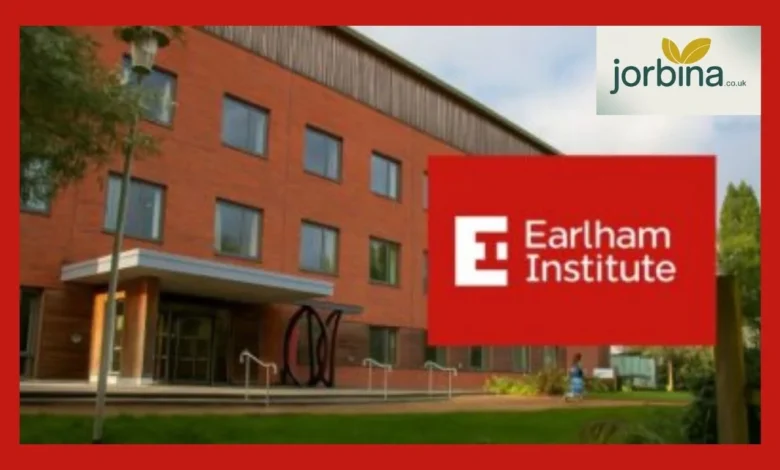
What does it really take to understand life? Not just a single gene or a snapshot in time, but the full system working together. That question drives the work of the Earlham Institute. It is not a flashy idea factory or a headline chaser. Instead, it is a place where patient science, powerful computation, and human curiosity come together to solve complex biological puzzles.
If you have heard the name but never quite knew what happens there, let me walk you through it.
A clear picture of the Earlham Institute
The Earlham Institute, often called Earlham Institute (EI), is a research institute in England focused on life sciences. It is based at the Norwich Research Park in Norwich and has become a key centre for genomics and computational bioscience. In simple terms, EI studies living systems by combining biology with advanced data analysis.
The institute was founded on July 3, 2009. Since then, it has built a strong reputation for asking ambitious questions and creating tools that help scientists worldwide. Rather than working in isolation, EI designs resources, datasets, and methods that others can use and build on.
This approach has made the Earlham Institute both influential and collaborative.
Location and environment shape the science.
The Earlham Institute is located at Norwich Research Park on Colney Lane. This matters more than it might seem. The park brings together research institutes, universities, healthcare organisations, and industry partners in one shared space.
That physical closeness encourages conversation and collaboration. Scientists can move quickly from idea to experiment to application. The official address is Norwich Research Park, Colney Lane, Norwich NR4 7UZ, United Kingdom. The institute is typically open during working hours and closes at 5:30 pm. For direct contact, the main phone number is +44 1603 450001.
Being part of this research park places EI at the centre of a vibrant scientific community.
What research looks like at the Earlham Institute
The core research areas at the Earlham Institute are genomics and computational bioscience. Researchers study plants, microbes, and other organisms at scale. They generate large volumes of biological data and then use computational methods to understand what that data means.
This work supports progress in food security, environmental sustainability, and health. Instead of focusing on narrow questions, EI looks at systems as a whole. That systems-level thinking helps reveal patterns that would otherwise remain hidden.
A defining feature of the Earlham Institute is its commitment to building enabling resources. These include reference genomes, analytical tools, and open datasets that support the wider scientific community.
Understanding Earlham Institute spatial transcriptomics
One area where EI has gained attention is Earlham Institute spatial transcriptomics. This field focuses on identifying where gene activity occurs within tissues. It is not enough to know which genes are active. Location matters.
Spatial transcriptomics allows researchers to see how gene expression changes across space. This helps explain development, disease progression, and responses to environmental stress. At the Earlham Institute, this research adds a new layer of understanding to complex biological systems.
It also shows how EI stays at the forefront of emerging genomic technologies.
Earlham Institute ranking and reputation
People often search for the Earlham Institute ranking. While independent research institutes are not ranked like universities, EI consistently earns strong recognition. Its scientists publish in respected journals and lead major collaborative projects.
Reputation in research is built over time. It comes from reliable methods, open data, and meaningful contributions. By those measures, the Earlham Institute ranks highly within its field.
Public feedback also reflects this trust. The institute holds a 4.68 Google Reviews rating, which suggests positive experiences from visitors, collaborators, and staff alike.
How communication supports science at EI
Earlham Institute communications are not an afterthought. They are a core part of how the institute operates. Research has little impact if it stays locked inside journals.
The communications team works closely with scientists to explain findings clearly. They engage with schools, policymakers, journalists, and the public. This helps bridge the gap between complex research and everyday understanding.
Clear communication also strengthens trust. It shows that science is not hidden or exclusive but open and shared.
Fellowships that shape scientific careers
The Earlham Institute fellowship programmes attract researchers at critical stages of their careers. These fellowships provide funding, mentorship, and independence. They allow scientists to explore bold ideas in a supportive environment.
Fellows at EI benefit from access to advanced computational infrastructure and collaborative networks. Just as important, they gain experience leading projects and shaping research directions.
This focus on people as well as projects is one reason the institute continues to attract global talent.
Earlham Institute PhD opportunities
Does the Earlham Institute offer PhDs? Yes. Earlham Institute PhD programmes are offered in partnership with universities. Students work on cutting-edge research while being embedded in EI’s interdisciplinary culture.
PhD researchers gain hands-on experience with genomics, data science, and experimental biology. They also develop transferable skills in analysis, communication, and collaboration. Graduates leave well prepared for careers in academia, industry, or policy.
Salary and working culture at the Earlham Institute
Earlham Institute salary levels depend on role and experience. As a publicly funded research institute, EI follows structured and transparent pay scales. Salaries are competitive within the UK research sector.
Beyond pay, many staff value the working environment. The institute supports flexible working, professional development, and a healthy research culture. These factors contribute to long-term staff satisfaction.
Earlham Institute, Wikipedia and public records
For a quick overview, many people visit the Earlham Institute on Wikipedia. The page summarises EI’s history, mission, and funding. It confirms that the institute focuses on exploring living systems using computational science and biotechnology.
Wikipedia also highlights EI’s position within the UK research landscape. While brief, it reflects the institute’s growing public visibility.
For official governance details, the EARLHAM INSTITUTE overview is available through Companies House.
This listing confirms legal status and organisational transparency.
Leadership, culture, and wider influence
Research institutes do not operate in isolation. Leadership culture, communication style, and public engagement all matter. Broader reflections on leadership and presence can be explored through discussions such as Evelyn Welch and the Power of Presence.
Creative communication also shapes how science connects with society. Perspectives on storytelling and identity appear in Exploring the World of Charlotte Faircloth.
Policy and public life influence research funding and priorities. Context around this can be found in The Untold Story Behind Martin Vickers’ Political Journey.
These viewpoints help frame the environment in which institutes like EI operate.
Is the Earlham Institute part of a university?
This is a common question. The Earlham Institute is not part of a single university. It is an independent research institute. However, it works closely with universities through PhD supervision and joint research projects.
This independence gives EI flexibility. It can focus fully on research while still contributing to education and training.
Funding and long-term stability
Who funds the Earlham Institute? The main funder is the Biotechnology and Biological Sciences Research Council. This public funding supports long-term research goals.
Because of this structure, EI can pursue ambitious projects without constant pressure for short-term returns. That stability is essential for deep scientific work.
Impact on science and society
The Earlham Institute contributes at multiple levels. Locally, it supports jobs, education, and outreach. Nationally and globally, it shares data, tools, and insights that advance science.
The institute continues to invest in areas like artificial intelligence, systems biology, and large-scale data analysis. These fields will shape how we understand life in the future.
FAQs about the Earlham Institute
Who funds the Earlham Institute?
The institute is primarily funded by the Biotechnology and Biological Sciences Research Council.
Where is the Earlham Institute?
It is located at the Norwich Research Park in Norwich, England.
Is the Earlham Institute part of a university?
No. It is an independent research institute that collaborates with universities.
Does the Earlham Institute offer PhDs?
Yes. Earlham Institute PhD programmes are offered in partnership with universities.
Is Earlham College financially stable?
Earlham College is a separate institution in the United States and is not connected to the Earlham Institute.
Closing thoughts
The Earlham Institute does not chase attention. It earns respect through careful work, open collaboration, and clear purpose. Combining biology with data science helps answer questions that matter to food, health, and the environment.
For anyone curious about how modern life science really works, the Earlham Institute offers a grounded and compelling example.