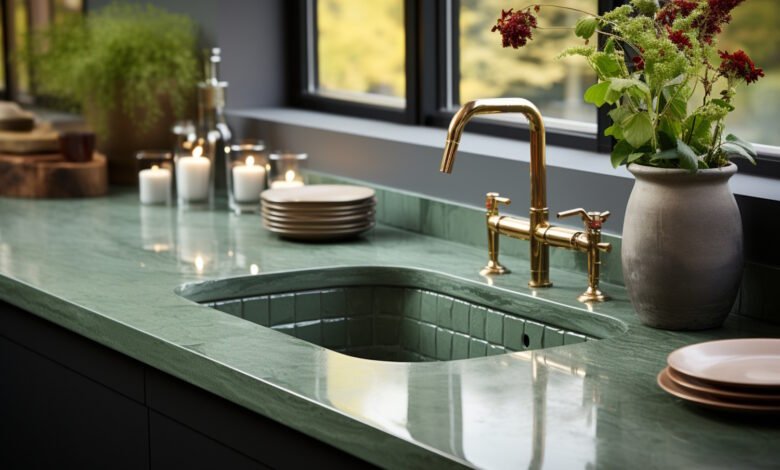
When designing a luxury kitchen, finding a surface that balances striking beauty with exceptional durability can feel like an endless search. Granite and engineered quartz have long dominated the conversation, yet one natural material has steadily gained recognition for delivering both elegance and strength in equal measure: quartzite. More than simply a visually appealing surface, Quartzite worktops offer a remarkable combination of natural artistry and everyday practicality. Understanding what makes this stone unique can help you decide whether it’s the perfect foundation for your kitchen.
Understanding Quartzite: A Natural Transformation
The story of quartzite begins millions of years ago. Originally formed as sandstone, composed mainly of quartz particles, it undergoes an intense transformation deep beneath the Earth’s surface. Through extreme heat and pressure, the individual grains fuse together in a metamorphic process, creating an incredibly dense and durable stone.
This transformation results in a surface that is predominantly pure quartz in natural form. Unlike engineered quartz, which is manufactured from crushed stone mixed with resins, quartzite is entirely natural. Each slab carries its own distinctive veining, tonal variations, and movement no two pieces are ever identical. This individuality is one of the defining characteristics that makes Quartzite worktops so desirable in premium kitchen spaces.
Exceptional Strength for Everyday Living
One of the most compelling reasons homeowners choose Quartzite worktops is their outstanding durability. Quartzite ranks between 7 and 8 on the Mohs hardness scale, placing it among the hardest natural stones used in interior design. In practical terms, this means superior resistance to scratches and daily wear.
For busy kitchens, this toughness is invaluable. Food preparation, heavy cookware, and constant activity demand a surface that can withstand pressure without compromising appearance. Quartzite rises to the challenge, offering resilience that surpasses many other natural stones.
Heat resistance is another significant advantage. Unlike engineered quartz, which can be vulnerable to high temperatures due to resin content, quartzite naturally tolerates heat far more effectively. While using trivets is always advisable, Quartzite worktops are well-suited to handle the occasional hot pan without sustaining damage.
Natural Beauty That Elevates Any Kitchen
While durability is impressive, it’s the visual appeal of Quartzite worktops that truly sets them apart. The stone often features soft backgrounds in shades of white, cream, grey, or pale gold, enhanced by flowing veins in deeper tones such as charcoal, blue, rust, or bronze.
Some varieties resemble the elegance of marble, offering sweeping patterns and delicate movement, but with far greater strength. Others present bold, dramatic veining that creates a striking focal point within the kitchen. This versatility allows quartzite to complement a wide range of interior styles from sleek contemporary designs to warm, traditional spaces.
Because it is a natural material, every slab is unique. The depth, character, and subtle color shifts found in Quartzite worktops provide a level of authenticity that manufactured materials simply cannot replicate.
Care and Maintenance: What to Expect
Although quartzite is exceptionally hard, it is not completely non-porous. Most Quartzite worktops require sealing upon installation to enhance stain resistance. A quality penetrating sealant fills microscopic pores in the stone, helping protect against spills from oils, wine, coffee, or acidic ingredients.
Resealing is typically recommended once a year, depending on usage. This simple step maintains the surface’s resistance and preserves its natural beauty. Daily cleaning is uncomplicated warm water, mild soap, and a soft cloth is generally sufficient. Harsh chemicals or abrasive cleaners should be avoided, as they can gradually weaken the protective seal.
With consistent yet minimal care, Quartzite worktops can retain their brilliance and structural integrity for decades.
Comparing Quartzite to Other Worktop Materials
When choosing a worktop material, quartzite is often compared with granite and engineered quartz. Each has its strengths, but quartzite occupies a distinctive position.
Granite is durable and naturally varied, yet its patterns can be more granular and less fluid than quartzite. Engineered quartz offers uniformity and requires no sealing, but it lacks the organic depth and high heat resistance of natural stone.
Quartzite bridges the gap. It delivers the authenticity and individuality of natural stone while offering hardness that frequently exceeds granite. Its ability to withstand heat better than engineered quartz further strengthens its appeal. For homeowners seeking both refined aesthetics and long-term performance, Quartzite worktops present a compelling solution.
A Long-Term Investment in Style and Performance
Selecting Quartzite worktops is not merely a design decision it is an investment in lasting quality. The stone carries a sense of permanence, shaped by geological forces over millions of years. It brings character and sophistication to the heart of the home while standing up to the demands of daily life.
Though it requires occasional sealing, the maintenance commitment is modest compared to the longevity and elegance it provides. Over time, quartzite continues to perform beautifully, maintaining its structure and visual appeal.
In modern kitchen design, where both form and function matter equally, Quartzite worktops represent a refined balance of the two. They are not simply surfaces they are enduring statements of natural craftsmanship, built to enhance your kitchen for years to come.
READ ALSO: Why Harborne Feels Like a Village in the Heart of Birmingham