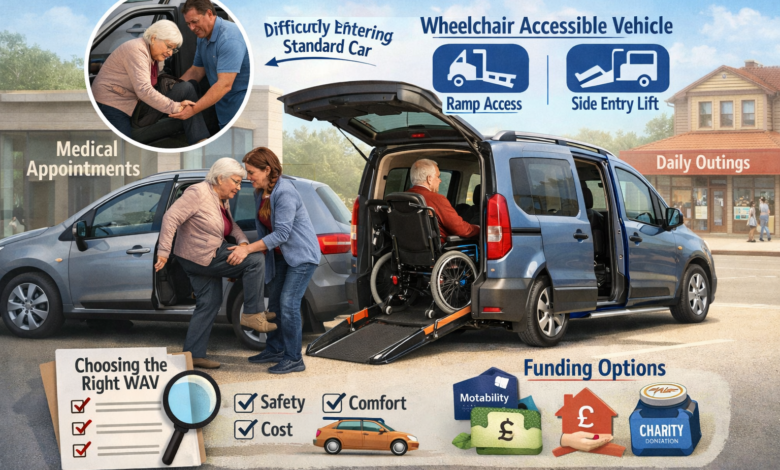
Getting into a car used to be automatic. A quick step, a slide into the seat, and the journey could begin. For many families across the UK, that simple act gradually becomes difficult. A parent who once drove independently may start struggling with mobility. A sibling who enjoyed weekend trips may no longer manage the step into a standard vehicle. When someone you care about cannot access a car anymore, daily life changes quickly.
Wheelchair accessible vehicles provide a practical option, though the market often feels confusing. New models carry high prices, and families are not always certain about long-term mobility needs. Used options are widely available, but questions about safety, modifications, and reliability often arise. Families want reassurance that the vehicle has been adapted correctly and will continue to function safely.
Understanding what makes a used wheelchair accessible vehicle suitable for daily use is important. Ramp systems, wheelchair restraints, and interior layout all affect whether a vehicle supports independence or creates difficulty. Knowing what to look for helps families make informed decisions before committing to a purchase.
Noticing When Standard Vehicle Access Becomes Impossible
The signs often appear gradually. A person may first need assistance stepping into the car. Later, transfers become awkward or unsafe. Eventually, using a standard door and seat presents a genuine fall risk.
Medical conditions linked to long-term mobility challenges after stroke, spinal injuries, and progressive neurological conditions often lead families to this point. Balance, strength, and flexibility may decline. When wheelchair use becomes permanent, standard vehicle access is no longer practical.
Daily routines quickly become affected. Medical appointments, social visits, and basic errands all depend on reliable transport. When transport becomes difficult, independence can shrink quickly. Planning ahead allows families to evaluate options before urgent decisions become necessary.
Timing matters as well. Finding and adapting a suitable vehicle can take time. Families who begin research early often have more flexibility and less pressure during the process.
Wheelchair Accessible Vehicle Types and Entry Formats
Used WAV vehicles exist in several configurations. The right format depends on the wheelchair user’s needs and the environment where the vehicle will be used most often. Many families begin their search by reviewing affordable used wheelchair accessible vehicles before deciding which entry layout suits their daily routines. The two most common configurations are rear-entry and side-entry designs.
Rear-entry vehicles, including conversions of models such as the Ford Tourneo or Peugeot Rifter, use a lowered floor and a ramp at the rear. This layout allows the wheelchair user to enter from behind the vehicle. Rear-entry designs often work well where driveways provide sufficient space for ramp deployment.
Side-entry formats, often found in adapted Volkswagen Caddy or Citroën Berlingo vehicles, use a sliding door with either a ramp or lift system. This layout is frequently chosen for urban environments where pavement access is necessary. The wheelchair user can board directly beside the kerb.
Safety equipment remains a central consideration in any used wheelchair accessible vehicle. Four-point restraint systems, such as those supplied by Q’Straint, should always be present. When inspecting a vehicle, check for intact belts, functioning buckles, and clearly labelled restraint equipment.
Comparing Rear-Entry and Side-Entry Access
Rear-entry vehicles require enough space behind the car for the ramp to extend fully. This layout works well in private driveways or larger parking areas where there is room to deploy the ramp safely. Families who park regularly on their own property often find rear-entry access straightforward because the wheelchair user can board without needing space along the side of the vehicle.
However, rear-entry access can be difficult in tighter public areas. Car parks with limited space behind the vehicle may prevent the ramp from opening fully. In these situations, the driver may need to reposition the vehicle before the wheelchair user can enter or exit safely.
Side-entry vehicles often suit urban environments more effectively. Kerbside parking allows the wheelchair user to board directly beside the pavement, which is helpful outside shops, clinics, or public buildings. Access from the pavement often depends on the presence of disabled parking bays and dropped kerbs, which allow wheelchair users to move safely between the pavement and the vehicle. This layout can reduce the need to move around the rear of the vehicle and may make boarding quicker in busy locations.
At the same time, side-entry vehicles require additional width for the door and ramp to open. When parked between closely positioned vehicles, the ramp may not deploy fully. Families should consider their typical parking environment before deciding which access format will work best.
Comparing Used and New Wheelchair Accessible Vehicles
New WAVs come at a significant cost. Purchasing a newly converted vehicle often involves a higher upfront price because the base vehicle and accessibility conversion are both included.
Used wheelchair accessible vehicles offer a more manageable entry point for many families. Prices vary depending on vehicle age, mileage, and the type of conversion installed. Vehicles that have already been adapted can provide reliable mobility while reducing the overall purchase cost.
Inspection is important when considering a used vehicle. Ramps should open and close smoothly, and restraint equipment must be intact and secure. These components play a direct role in safety during travel and must align with UK laws governing powered mobility devices.
The base vehicle should also have a clear service history. Maintenance records help confirm that the vehicle has been looked after properly and that major repairs have been addressed. Taking time to check both the mechanical condition and the accessibility equipment helps families choose a vehicle that will remain dependable in daily use.
Funding Options and Financial Planning
The Motability Scheme remains one of the most common funding routes for wheelchair accessible vehicles in the UK. Eligibility usually requires the Enhanced Rate mobility component of Personal Independence Payment, which is approximately £71.00 per week in 2025. Advance payments for certain WAV models may still apply depending on specification.
Local authority Disabled Facilities Grants represent another potential funding source. In England, these means-tested grants may provide up to £30,000 for accessibility adaptations. Several charitable organisations, including the Motability Foundation and the Family Fund, also offer financial support for families who do not qualify for statutory schemes.
Vehicles used primarily for disabled passengers may also qualify for Vehicle Excise Duty exemption. Insurance costs sometimes differ from standard vehicles, so obtaining quotes early is advisable. Reviewing funding routes and ownership costs before committing to a purchase helps families identify which used wav vehicles fit both their accessibility needs and financial situation.
For many families, the moment a loved one can no longer enter a standard vehicle marks a significant change in daily life. Wheelchair accessible vehicles restore the ability to attend appointments, visit friends, and continue everyday routines. By understanding vehicle layouts, safety equipment, and funding options, families can approach the decision with greater clarity. With the right preparation, reliable transport remains possible even as mobility needs change.