A basic email setup can feel fine right up to the point where one inbox starts carrying too much. One address keeps collecting everything: new leads, support replies, billing questions, all the little follow-ups that fill a normal day. Nothing is technically broken. Still, the inbox gets easier to avoid and harder to keep clean.
A customer message sits too long next to internal back-and-forth. A payment reply slips under routine threads. Somebody forwards the same email twice because no one is fully sure who was meant to handle it. After a while, one inbox just feels too small for the amount of work moving through it.
When Too Much Ends Up in One Inbox
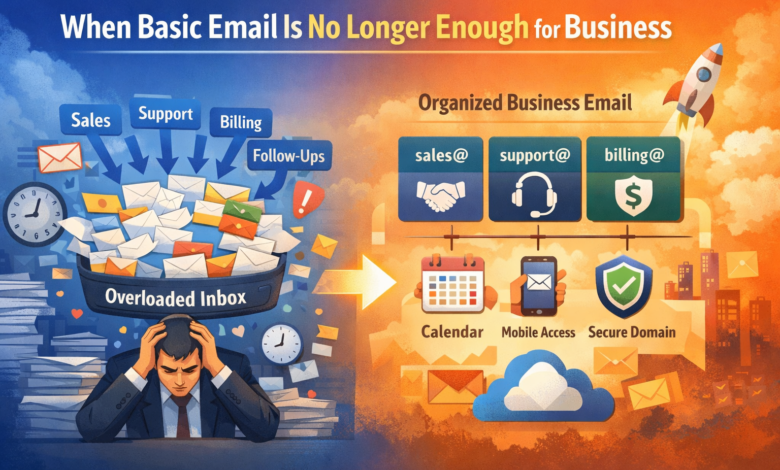
The first real problem is not the number of messages. It is what gets lumped together. Once it does, different messages stop getting handled the way they should. That is usually where business email starts making sense. Leads do not have to sit next to support, billing, and internal follow-ups all in the same stream.
You tend to spot it in small ways:
- a lead gets answered later than it should
- a support message slips below easier replies
- billing waits because it does not look urgent at first glance
- internal threads keep crowding the same space customers depend on
When Replies Start Taking Longer
The next issue shows up when a reply has to pass through too many hands before it goes out. One person opens the message, but somebody else has the missing detail. A follow-up shows up in the same thread, but the answer still depends on another person. The message is there, but the reply takes longer to come together.
It gives those conversations a clearer path from the start, so less time gets lost passing messages around before the right person can reply. The context stays in a more useful place, and even simple answers are less likely to get delayed by internal back-and-forth.
Where Free Email Starts Running Out
A free address usually starts falling short when different kinds of business email still have to come through the same general inbox.
A customer question arrives in the same place as a payment reply. A sales inquiry sits next to routine back-and-forth. Someone has to decide by hand what needs a fast answer, what belongs to support, and what should have gone somewhere else from the start. Sorting, prioritizing, and redirecting keep landing on you or someone on the team.
That is where business email starts making a real difference. It gives the business clearer contact points, so messages do not all arrive as one mixed flow. Sales can go one way, support another, billing somewhere else, and less of the work has to be held together manually in the middle.
What You Actually Get From Business Email
What does business email give you once a general inbox stops working? More than a better-looking address. It gives the business clearer ways in and fewer loose ends around the messages themselves.
With business email, you can usually get:
• email on your own domain
• separate addresses for sales, support, billing, or admin
• clearer contact points for customers and partners
• fewer messages arriving without a clear place to go
• less time lost deciding who should handle what
• a more credible address for first contact, payments, and routine business communication
You notice the difference pretty quickly. People can see where to write, and the business stops relying so heavily on one general inbox to catch everything. A business domain also looks more established than a generic free address, especially in first contact or payment-related communication.
When Free Email Stops Saving You Time
It does not take much. Free email can start asking for more work than it should. A few regular leads may be enough. Customer questions most days. Payment-related replies that should not sit too long. Shared follow-ups that more than one person may need to see. It just starts leaning on people faster than expected.
At first, free email looks convenient because it is already there. But after a point, that convenience wears thin. More context lives in people’s heads. More follow-ups depend on somebody remembering what happened earlier. More of the structure has to be carried manually instead of being supported by the setup itself.
That is usually when business email stops feeling like something for later. It starts looking like the more workable version of something the business already uses every day.
Why Spaceship Fits This Step
By this point, email does not need to turn into another project. What helps more is a setup that feels manageable and does not create the same mess again a week later.
That is usually when Spaceship starts to feel like the easier move. You get business email on your own domain, plus the parts that start mattering once a basic setup feels too tight. Extra mailboxes if you need them later. Aliases. Calendar. Mobile access. Built-in migration. There is also a trial period, which makes the switch easier to test without turning it into a bigger commitment than it needs to be.
A few pieces matter most here:
- email on your own domain
- built-in calendar
- mobile apps
- aliases
- extra mailboxes and expandable storage
- built-in migration
- IMAP, SMTP, and POP3 support
- 2FA and anti-spam protection
That combination matters because the next step should stay practical. You are not only moving away from a free inbox. You are moving into something easier to manage, easier to connect to other mail apps, and easier to keep useful once email starts doing real business work every day.
The Bottom Line
Email rarely turns into a problem all at once. More often, it just starts asking for more effort than it should. Messages take longer to sort. Replies get slower. Too much of the structure lives in people instead of the setup behind it.
That is usually the point where business email stops looking like a nice extra and starts looking like basic support for the way the business already runs. And if the old setup is starting to feel too small for the amount of work passing through it, Spaceship is a sensible next step to make that shift without turning it into a bigger project than it needs to be.