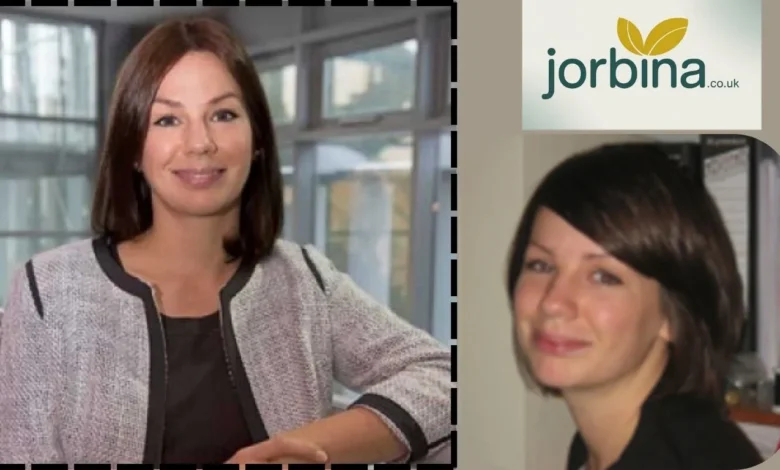
A question worth asking
What does it really mean to study family in a modern world full of advice, noise and social pressure? And who are the thinkers quietly shaping how we talk about parenting work and identity? One name keeps coming up in these conversations. Charlotte Faircloth. Her work sits at the crossroads of sociology, family life and public debate. Let me explain why her voice matters and why so many people want to know more about her life as well as her ideas.
Who is Charlotte Faircloth?
Charlotte Faircloth is a British sociologist known for her research on parenting, motherhood and family culture. She is widely recognised for challenging simple narratives about what makes a good parent. Rather than offering rules, she asks harder questions. Why do certain ideas become dominant? Who benefits from them? And how do they shape everyday life?
She currently serves as Professor of Family and Society at the UCL Social Research Institute and is Co-Director of the Thomas Coram Research Unit. Her academic role places her at the centre of research on families, children, and social policy. You can find a professional overview on her profile as Charlotte Faircloth – Professor of Family and Society at UCL.
Charlotte Faircloth’s academic roots
Every researcher is shaped by their education. Charlotte Faircloth studied at the University of Cambridge between 2005 and 2009. During those years, she developed a strong grounding in social science research methods and theory. This foundation later informed her critical approach to parenting culture.
Her academic journey did not stop there. She went on to build a career at University College London, where she now teaches and supervises future researchers. Her presence at UCL reflects her commitment to combining research with real-world relevance.
A sociologist focused on family and society.
Charlotte Faircloth is often described as a sociologist of parenting. That label only scratches the surface. Her research explores how parents are judged, how expertise is constructed, and how motherhood in particular becomes a site of moral pressure.
She is known for examining intensive parenting culture. This is the idea that parents, especially mothers, must constantly invest time, emotion and resources to secure their child’s future. Faircloth asks whether this pressure is helpful or harmful.
One of her widely cited arguments appears in her work as Charlotte Faircloth, Sociologist. Breastfeeding doesn’t determine a child’s future, so we should stop pretending it does, as published by The Independent. The core message is clear. Parenting outcomes are complex. Reducing them to single behaviours misses the bigger picture.
Breastfeeding debates and public conversation
Breastfeeding is one of the most emotionally charged topics in modern parenting. Charlotte Faircloth has written extensively about how breastfeeding is framed as a moral obligation rather than a choice. She does not argue against breastfeeding itself. Instead, she critiques how it is used as a benchmark for good motherhood.
Her research highlights how such narratives can create guilt and exclusion. This includes the experiences of parents who cannot breastfeed or choose not to. Her work has been featured by The Independent and discussed in academic circles as well as mainstream media.
This balanced approach has made her a trusted voice for parents looking for clarity without judgment.
Charlotte Faircloth and IVF discussions
IVF is another area where science, personal choice and social expectation collide. While Charlotte Faircloth does not centre her work on IVF treatment itself, she examines how fertility and reproduction are talked about in society.
Her research explores how parents using IVF may face different forms of scrutiny. Questions about legitimacy, effort and deservingness often surface. Faircloth’s contribution lies in unpacking these hidden assumptions and showing how they shape family experiences.
Rather than offering medical advice, she focuses on the cultural stories that surround reproductive technology.
Charlotte Faircloth’s view on parenthood
So what is Charlotte Faircloth’s view on parenthood? At its core, her perspective is humane and grounded. She argues that parenting should not be treated as a competitive sport or a moral test. Instead, it is a relationship shaped by context, resources and support systems.
She encourages policymakers, professionals, and parents to move away from blame. Her work consistently calls for trust in families rather than constant surveillance.
This approach resonates with readers who feel overwhelmed by advice culture and impossible standards.
Books and published work
Charlotte Faircloth has written and contributed to several influential academic books and journal articles. Her publications often focus on motherhood expertise and parenting norms. These works are frequently cited in sociology, education and health studies.
While she does not publish popular parenting manuals, her academic writing has reached a wide audience through media coverage and policy discussions. Her work is indexed on platforms such as Google Scholar under Charlotte Faircloth, Google Scholar, where her citation record reflects her impact in the field.
Charlotte Faircloth, Wikipedia, and public profiles
Many people search for Charlotte Faircloth’s Wikipedia hoping for a single-page summary. While a dedicated Wikipedia page may be limited or evolving, her professional presence is well documented through university profiles and academic databases.
Her UCL profile outlines her research interests, teaching roles and leadership positions. She is also listed among the Group Members | Faculty of Population Health Sciences at UCL, which highlights her interdisciplinary reach.
Charlotte Faircloth’s LinkedIn presence
For those curious about her professional journey, Charlotte Faircloth’s LinkedIn offers a snapshot of her academic roles, affiliations and achievements. LinkedIn provides insight into her leadership work and collaborative projects beyond published research.
This platform also reflects how she connects academic research with public engagement, which is a recurring theme in her career.
Charlotte Faircloth and Amol Rajan’s wedding
Charlotte Faircloth is married to journalist and broadcaster Amol Rajan. The couple married in 2013. Their relationship often attracts public interest due to Rajan’s media profile. However, both maintain a relatively private family life.
Charlotte Faircloth and Amol Rajan’s wedding marked the start of a partnership between two public thinkers working in different spheres. While Rajan operates in journalism, Faircloth works in academia. Together, they represent a blend of public discourse and scholarly analysis.
Family life and shared values
Although public appearances are rare, the couple share an interest in social issues, education and public debate. Charlotte Faircloth’s work on parenting culture often intersects with broader media conversations that Amol Rajan engages in through his journalism.
This shared intellectual curiosity likely informs how they approach family life, though they keep personal details largely out of the spotlight.
Charlotte Faircloth’s age and personal details
Questions about Charlotte Faircloth’s age are common, though she does not foreground this information publicly. Like many academics, she prefers to let her work speak for itself rather than focus on personal milestones.
This choice aligns with her broader message about resisting unnecessary scrutiny, especially when it comes to family and life stages.
Charlotte Faircloth School and early influences
Details about Charlotte Faircloth’s school education before university are not widely publicised. What is clear is that her academic path led her to Cambridge and then to UCL, where she built her career.
Her research suggests early exposure to critical thinking and social analysis, which likely shaped her later focus on family sociology.
Amol Rajan’s height and net worth
Public curiosity often extends to her spouse. Amol Rajan’s height and Amol Rajan’s net worth are frequently searched topics due to his visibility in the British media. While such details circulate online, they remain secondary to the substantive work both individuals do in their respective fields.
Charlotte Faircloth herself tends to avoid celebrity framing and stays focused on research and teaching.
Teaching and leadership at UCL
At UCL, Charlotte Faircloth plays a leadership role as co-director of the Thomas Coram Research Unit. This unit focuses on improving the lives of children and families through research and policy engagement.
Her teaching style is described by students as thoughtful and challenging. She encourages debate and critical reflection rather than rote learning.
Influence beyond academia
Charlotte Faircloth’s influence reaches beyond university walls. Policymakers, journalists and health professionals often draw on her research. Her work helps reframe debates around parenting advice, public health messaging, and family support.
She is particularly influential in questioning how expert advice is communicated to parents. Her findings suggest that too much emphasis on individual responsibility can obscure structural issues like inequality and access to services.
Connecting ideas and leadership
Her approach to leadership mirrors broader lessons seen in other fields. For readers interested in leadership narratives beyond academia, you might also explore
https://jorbina.co.uk/damian-mckinney/
https://jorbina.co.uk/charlie-dewhirst/
https://jorbina.co.uk/doone-boorman/
These stories echo a similar theme. Thoughtful leadership often comes from questioning assumptions rather than enforcing rigid rules.
Why Charlotte Faircloth’s work matters now
Parenting culture is louder than ever. Social media amplifies judgment. Advice is constant and often contradictory. Charlotte Faircloth offers something rare. Perspective.
She reminds us that families are diverse. Children thrive in many contexts. And no single practice guarantees success. Her work invites compassion and realism into conversations that often lack both.
FAQs
Who is Charlotte Faircloth?
Charlotte Faircloth is a British sociologist and professor of family and society at University College London. She specialises in research on parenting, motherhood and family culture.
What is Charlotte Faircloth’s contribution to sociology?
Her contribution lies in critically examining parenting norms, especially around breastfeeding, intensive motherhood and expertise. She challenges simplified narratives and highlights social context.
What is Charlotte Faircloth’s view on parenthood?
She views parenthood as a relational and socially shaped experience rather than a checklist of behaviours. She argues against moralising parenting choices.
What is Charlotte Faircloth’s educational history?
She studied at the University of Cambridge from 2005 to 2009 and later built her academic career at University College London.
What books has Charlotte Faircloth written?
She has authored and contributed to several academic books and journal articles focusing on parenting culture, motherhood, and social expertise. Her work is widely cited in sociology and health studies.
A final thought
Charlotte Faircloth does not tell parents what to do. She does something more valuable. She helps us see why we feel so pressured in the first place. In a world obsessed with perfect outcomes, that insight feels quietly radical.