At A Glance
- Despite being famed for their low-maintenance nature, UPVC doors have a habit of dropping
- Dropping is sometimes referred to as sagging, and it means the door hinges have dipped
- UPVC door dropping is common and is often related to hinge tension and alignment
- Adjusting UPVC door hinges is an easy DIY task that you can take care of in minutes
- Adjust UPVC door hinges carefully, using small turns and increments to align properly
- Is your door still sagging/dropping? Contact a professional locksmith instead
If your UPVC door is sagging, it might be time to consider adjusting UPVC door hinges. Despite their popularity and low-maintenance nature, low-maintenance does not mean no-maintenance. As such, over time, your UPVC door might start to drop or sag. That means the door is no longer hanging as high as it should, which, according to experts at Locks & Hardware, is a serious issue!
How do you stop a door from dropping? You will need to learn how to adjust the hinges. Now, we get your trepidation: you might be wondering, ‘how do I adjust the hinges on a UPVC door without damaging the thing?’ – the good news is that learning how to adjust hinges on a UPVC door is easy.
Our quick-fire guide will give you a rough idea of what you should be doing to re-adjust your doors. If you try this and your door is still dropping, though, it might be worth contacting a locksmith instead.
Why Do UPVC Doors Drop Or Sag?
As you likely already know, your UPVC doors are hung in place using hinges. Over time, hinges will begin to drop due to the weight of the door and the consequences of continual usage.
Hinge tension will ease off over time, meaning the screws are no longer as tight as they were. As such, your doors will now begin to drop. How do you know if a door is dropping? Well, you might start to notice issues such as:
- Your UPVC door now drags a little on the floor when opening or closing the door itself
- The lock mechanism no longer lines up correctly, fighting against you when locking up
- Visible signs of light coming in around the top and edges of the door
Any of these issues is a clear sign that your UPVC door hinges may need adjustment. The good news is that adjusting UPVC door hinges is a DIY task, and one you can often complete quickly. Let’s take a look at how to properly adjust hinges on UPVC door designs so you can tackle this issue.
How Do I Adjust Hinges On A UPVC Door?
UPVC doors have luckily been designed to allow for easy hinge adjustment. For the most part, you will need either a Philips or a flathead screwdriver, nothing more. However, we would also recommend that you pick up:
- A hex key – while rare, some UPVC doors have hinges that are adjusted with a hex key
- A spirit level – this helps you make sure that your door is 100% level with the door frame
- A lubricant – ideally, a silicone-based lubricant will keep the hinges operating smoothly
BEFORE YOU START, make sure that you verify if your UPVC door comes with a specific guarantee or warranty. You may void this guarantee or warranty with DIY adjustments. If that is the case and you wish to protect your warranty/guarantee, contact a professional instead of going down the DIY route.
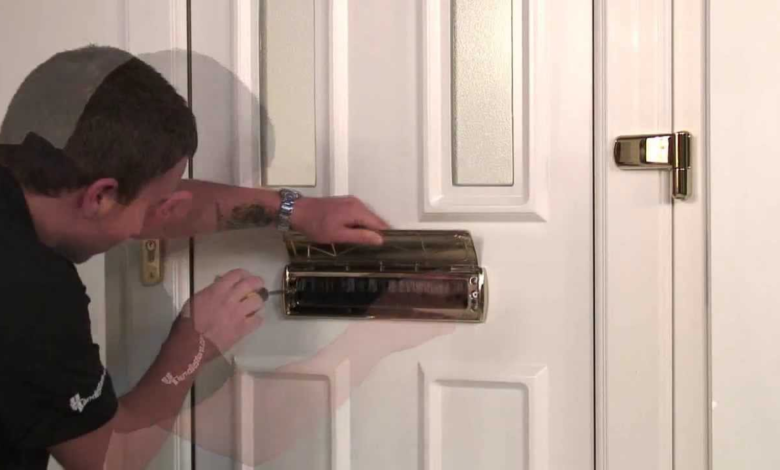
- First off, open up your UPVC door as wide as you can. Put something to help keep the door open, such as a door stop or bolster.
- Now, check the hinge. You should have T-hinges, flag hinges, or butt hinges. Most modern doors will have flag hinges, which provide the most versatility in terms of adjustments.
- Once you know what hinge type you have, you need to look closely at the hinge design. All you need to do here is check the tightness of each of your hinge screws.
- If your hinges have a pin holding them in place, remove the ‘grub’ screw that holds the pin in place. This will allow you to adjust each of the other hinge screws.
- Other hinges might have a cap on top of the hinge. Pop this off using a flathead screwdriver.
- Go around each hinge screw that you can see and get access to, and tighten them a little. Test the door. Does your door feel more level now? Does everything still line up as needed?
- Alternatively, you might need to loosen some of your hinge screws. A hinge screw that is too tight could cause the door to feel too rigid and stiff when opening.
- Either way, tighten/loosen each screw, adjusting with one rotation each time before testing. Most of the time, it only takes a few minor turns of the screw to find the right adjustment.
- Once you have the right level, make sure all of your hinge screws are turned to the same level. That should ensure a level finish and complete alignment with your door frame.
- You will know if your hinges are level if your door opens and closes correctly.
- Also, check for signs of visible light coming in around the side and top of the door.
- Lastly, verify that your lock mechanism and your latch all still line up and work properly.
When Should I Contact A Locksmith?
The above adjustments should be enough to go about adjusting UPVC door hinges without any extra help or assistance.
If you try to follow our guide above and you cannot make a difference in your door dropping, it’s time to call on a professional. Unfortunately, the issue might be more complicated than hinge tension.
It could be that your door or the door frame is damaged. Or, it could be that one of your hinges has worn out to the point of replacement. If adjusting UPVC door hinges is not enough to get your door level again, we would recommend contacting a professional for hinge servicing and adjustment.
Take Care Of Your UPVC Doors, And They’ll Take Care Of You
UPVC doors are still the best choice for most modern UK households. They are stylish, secure, easy to maintain, and highly efficient compared to other door types. They are not perfect, though.
Even the strongest, sturdiest of UPVC door hinges will eventually start to wear out. When a hinge is not holding a door properly in place, the door will start to sag. Leave that problem to fester, and you may end up needing more extensive – and, yes, expensive – door repairs.
Take action by using our guide on adjusting UPVC door hinges. Test out this hypothesis. If this does not fix the issue, contact a locksmith. The problem might be more specific or significant. Either way, as soon as you notice your front door dipping, focus on finding a solution to the problem ASAP!